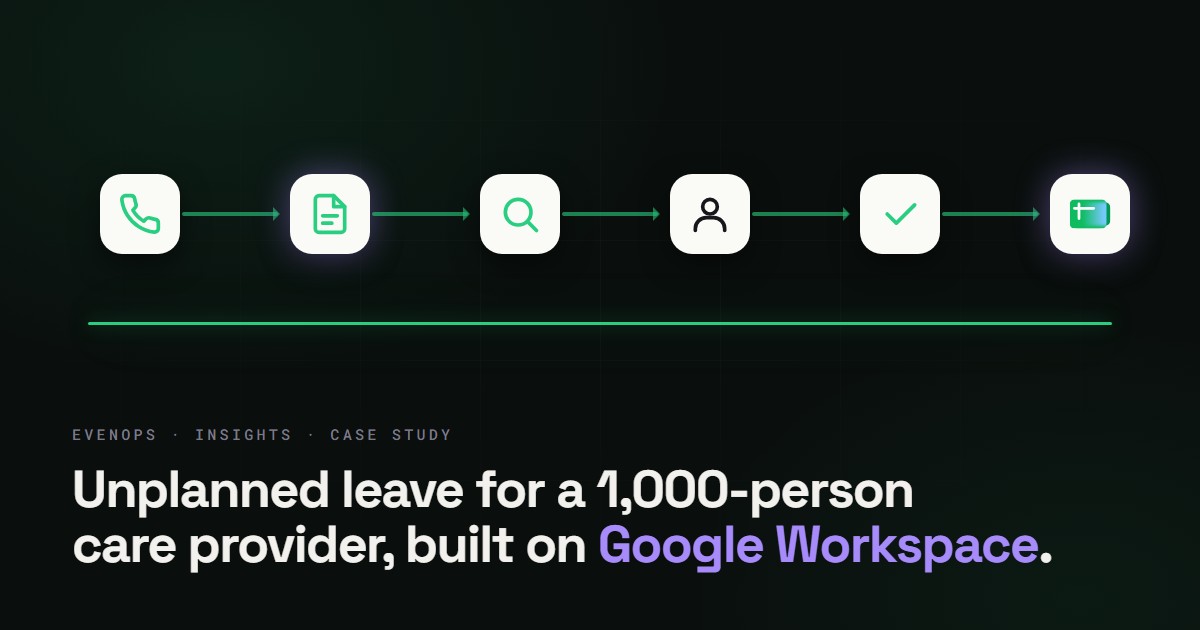
In most automated business workflows, AI performs only one or two steps - reading messy input like PDFs, emails, or notes. Everything else is deterministic logic: routing, checks, updates, and approvals. Zapier's Q2 2026 Workflow Index measured about 18% of workflow steps calling AI; the other 82% is plain automation. Evenops designs rules-first for exactly this reason.
Why does the 18/82 ratio hold?
Models read, rules decideModels read; rules decide. A deterministic check runs the same way every time, costs a fraction of a cent, and never hallucinates a figure it wasn't sure about. Once a step can be written as a rule - if this, then that - it should be, because rules are cheaper to run, easier to test, and simple to audit when something goes wrong.
AI keeps its place on the steps rules genuinely cannot handle: unstructured text, a scanned invoice, a customer's own phrasing. Everything downstream of that single read - matching, validating, updating a record, notifying a person - stays deterministic.
What does this mean for buyers evaluating automation?
Rules firstAutomate the rules first. Most of the value in a workflow sits in the plain 82%, and it is also the fastest and cheapest part to build. Put AI only where the input is genuinely messy - a PDF, an email, a handwritten note - and keep a person on the decisions that carry real consequences: refunds, exceptions, anything touching money or compliance.
A system that is reliable but narrow beats one that is broad but occasionally wrong. Asking a vendor what happens when a step fails tells you more about their build than asking whether it can do X.
How do teams climb from one automated step to a full workflow?
4 rungsMost teams climb the same four rungs, adding AI only where the rung below it has already proven the rules hold up:
Drafts.
AI suggests a reply or a summary; a person still sends it.
Extraction.
AI reads a document into structured fields; rules validate them before anything moves.
Routing.
Extracted data runs through checks and lands in the right queue or system automatically.
Coordination.
Multiple steps run end to end, with AI called only where a new rung actually needs it.
Continues · Want this built
Want this built, not just read about?
Tell us the workflow. We'll scope it and build it as production code you own.
We typically respond within 24 hours